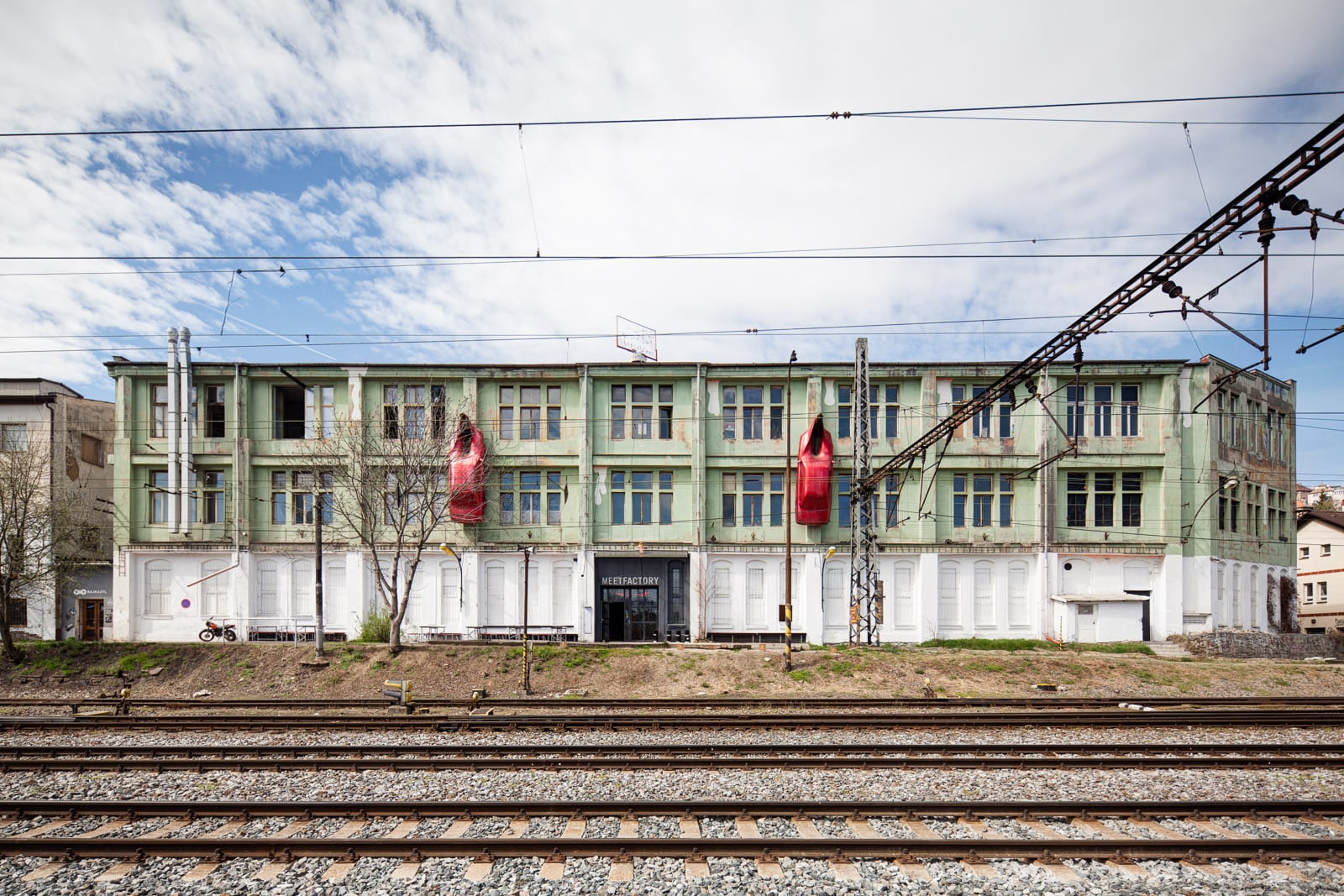
Residency at MeetFactory, Prague, 2025
Queer Epistemes in State-Socialist East Central Europe: A Comparative Analysis of Cultural Policy and Representation in Hungary, Czechoslovakia, and Poland
The primary aim of Katalin Benedek's fellowship at Warsaw University is to expand upon her ongoing research and develop her forthcoming studies, focusing on a transnational understanding of queer epistemes within the state-socialist East Central European politico-cultural fields, specifically through Hungarian, Czechoslovak, and Polish contexts
During her fellowship, Katalin Benedek will build upon her recently defended dissertation at the Freie Universität Berlin, particularly its second chapter titled "Queer Lives and Queer Cultural Representation in the Hungarian People’s Republic: Deconstructing the Imagined Censorship - Queer Matter in the Kádár-era (1956-1989/90)." This research will be further enriched with insights gained from her recent two month research residency in the Czech Republic, and now, she will incorporate relevant Polish aspects and cases.
Katalin Benedek’s 8-week Fellowship Activities in Warsaw will include:
Drafting a Comparative Research Paper: Queer Epistemes in State-Socialist East Central Europe: A Comparative Analysis of Cultural Policy and Representation in Hungary, Czechoslovakia, and Poland
Writing up a comprehensive comparative paper that combines her original chapter with her new findings from the Czech Republic and Poland, to be reviewed and refined with input from the colleagues of the Art History Department at the University of Warsaw: Prof. Dr. Hab. Agata Jakubowska and Dr. Wojciech Szymański.
Exploring Late Socialist Polish Art and Culture:
Conducting library research and visiting key collections, including national art collections and queer-specific archives such as the Lambda Archives, Karol Radziszewski's Queer Archives Institute, and Pismo Widok.
Gaining insight into the trends, actors, and operational structures within the broader cultural field of late socialist Poland.
Examining Cultural Policy and Censorship:
Focusing on the correlation between cultural policy, censorship structures, and queer themes and imagery in arts and culture of the state socialist time.
Research at the National Film Archives (FINA):
Conducting quantitative research on film releases during the late socialist period to compile a credible data set for comparison with Hungarian and Czechslovak databases on queer films screened during the same era.
Engaging with Scholarly and Public Narratives:
Meetings and consultations with prominent figures, including faculty members of the Art History Institute of the University of Warsaw.
Collaborating with scholars and activists across institutions
Presentation of Research Findings:
At the conclusion of her residency, Katalin Benedek will present her research findings in a special lecture at the faculty, providing an opportunity for academic exchange and discussion.
Kata Benedek: Queer In/Visibilities in State-Socialist East Central European Cultural Fields
lecture
Jack J. Halberstam In a Queer Time and Place wrote about “climates where homosexual identity is not forbidden but simply unthinkable”. Our current episteme suggests something rather similar about the state-socialist queer lives and cultural production in East Central Europe. However, the more challenging it is to ask questions about the unthinkable, the more important it is to do so. Can relevant cultural artifacts help to formulate the questions? Of course, they can.
The Hungarian case.